Showing posts with label Uzbekistan 32. Show all posts

Uzbekistan - Ancient Termiz

"Ancient Termiz includes Qoratepa, Fayaztepa, Zurmala Mortar, Qirq-Qiz, Khakim at-Termiziy, Sultan-Saodat, Kokildor Khonaqo, Djarqurgan Minaret, Kampirtepa. Old Termiz is located in 5 km to the northwest from Termiz, on the right branch of Amudarya River. A total area is 500 hectares consists of four parts, a citadel - Qala, two shakhristans (city) and rabad - the suburb, divided by the fortifications. Capacity of the cultural layers from 2 till 19 m on the citadel. It has arisen in IV - III centuries B.C. The city settlement is formed by the fortress, probably known as Demetriya in III - II centuries B.C. In Kushan period, the large administrative and ideological center of the Northern Bactria was the city of Tarmit with the several Buddhist monasteries - Fayaztepa and Qoratepa. Special blossoming has reached at the IX - X centuries - beginning of XIII century, being the largest trade center-craft of the Northern Toharistan. Mongols destroyed the city in 1220. Partially grows roots in the XVI - XVII centuries. Archeological excavations discovered Buddhist monasteries, palace of Termiz shahs, mosque, buildings of metalworker and potters, walls, economic-inhabited complexes. Necropolis Sultan-Saodat, khonaqo of Kokildor, complex of Qirq-Qiz, the mausoleum Al-Khakim at-Termiziy, Zurmal Mortar, Djarqurgan Minaret, Oq-Ostona Bobo, Kampirtepa are located in the territory of the ancient Termiz."

Source: UNESCO World Heritage Tentative List 


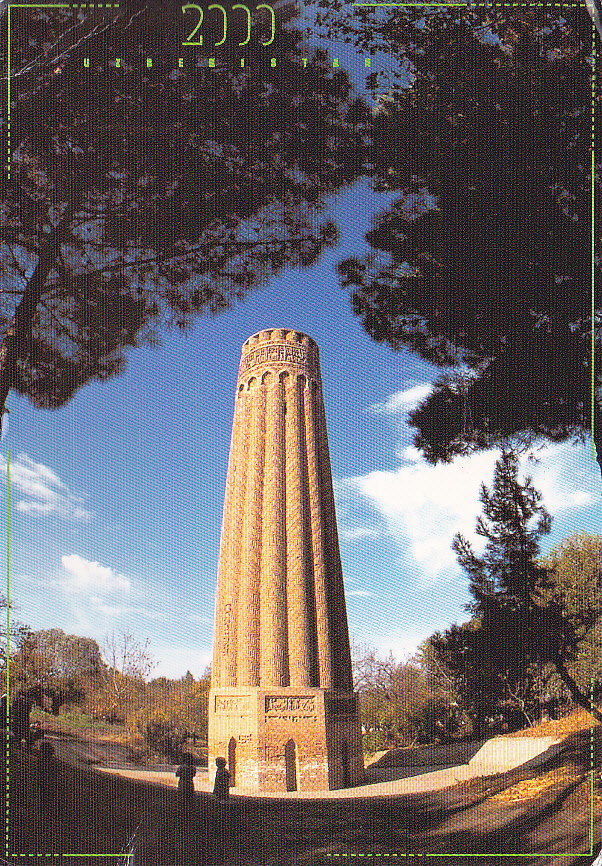
Jarkurgan (Djarqugan) Minaret at Surhandarya, Uzbekistan. It is a fluted tower. Thanks to Brigitte of Germany.


Uzbekistan - Historic Center of Qoqon

"Qoqon - is one of the cultural centers of Ancient East. It is located in the western part of Ferghana valley in the lower stream of Sokh. Historical Center of Qoqon consisting of following cultural objects: Komol-Kozi Madrasah, Dahman Shahon, Madarihon Madrasah, Norbutabiy Madrasah, Gishtlik Mosque, apartment houses. The most ancient data about Qoqon date back to the II century B.C. and belong to the Chinese traveller Chzhan Tszjan, who has characterized it as a large and developed city of the valley. Data of Qoqon presented in the works of the Arabian historians and geographers in the X-XII cc., al-Istakhri, Ibn Khav Qala, Al-Makdisi and in other sources. The city that described by ancient authors is still functioning in this place now. There were 52 madrasahs, many mosques, caravanserais, bazaars, baths and other public constructions at the beginning of the last century in the city. The most worthy attention are fine and unique by their beauty and architectural shape of buildings - a residence of governors Qoqon Khanate - Urda, Norbutabiy Madrasah, Djamiy mosque, Kamol Kozi Madrasah, Dasturkhonchi, Sohibzod Kazrat, Zingbardor and many others, have been realized talent and skill of residents of Ferghana valley, which are admired all people..." Source: UNESCO World Heritage Tentative List

Architectural Complex Jami Mosque Iwan Done, Kokand or Qoqon, Uzbekistan. I bought this postcard at the Uzbekistan Pavilion at 2010 Shanghai World Expo in October, 2010.